







.png?width=435&height=363&name=PFAS%20Graphic%20(1).png)
PFAS remediation projects are expanding across the United States as municipalities, industrial facilities, environmental consultants, and remediation contractors work to address contamination in groundwater and soil.
While every project has unique treatment requirements, they all share a common challenge: getting reliable treatment systems into operation quickly without sacrificing flexibility.
As remediation efforts continue to grow, many project teams are moving away from traditional, site-built infrastructure in favor of modular skid systems that can be deployed faster, relocated as needed, and customized for evolving treatment strategies.
Unlike many treatment applications, PFAS remediation rarely follows a standard design.
Site conditions can vary significantly based on contamination levels, hydrogeology, available utilities, and treatment objectives. Some projects focus on groundwater extraction and treatment, while others require chemical dosing, vapor extraction, or support for granular activated carbon (GAC) systems.
As additional sampling data becomes available, treatment plans often change throughout the life of a project. That means equipment needs to be just as adaptable as the remediation strategy itself.

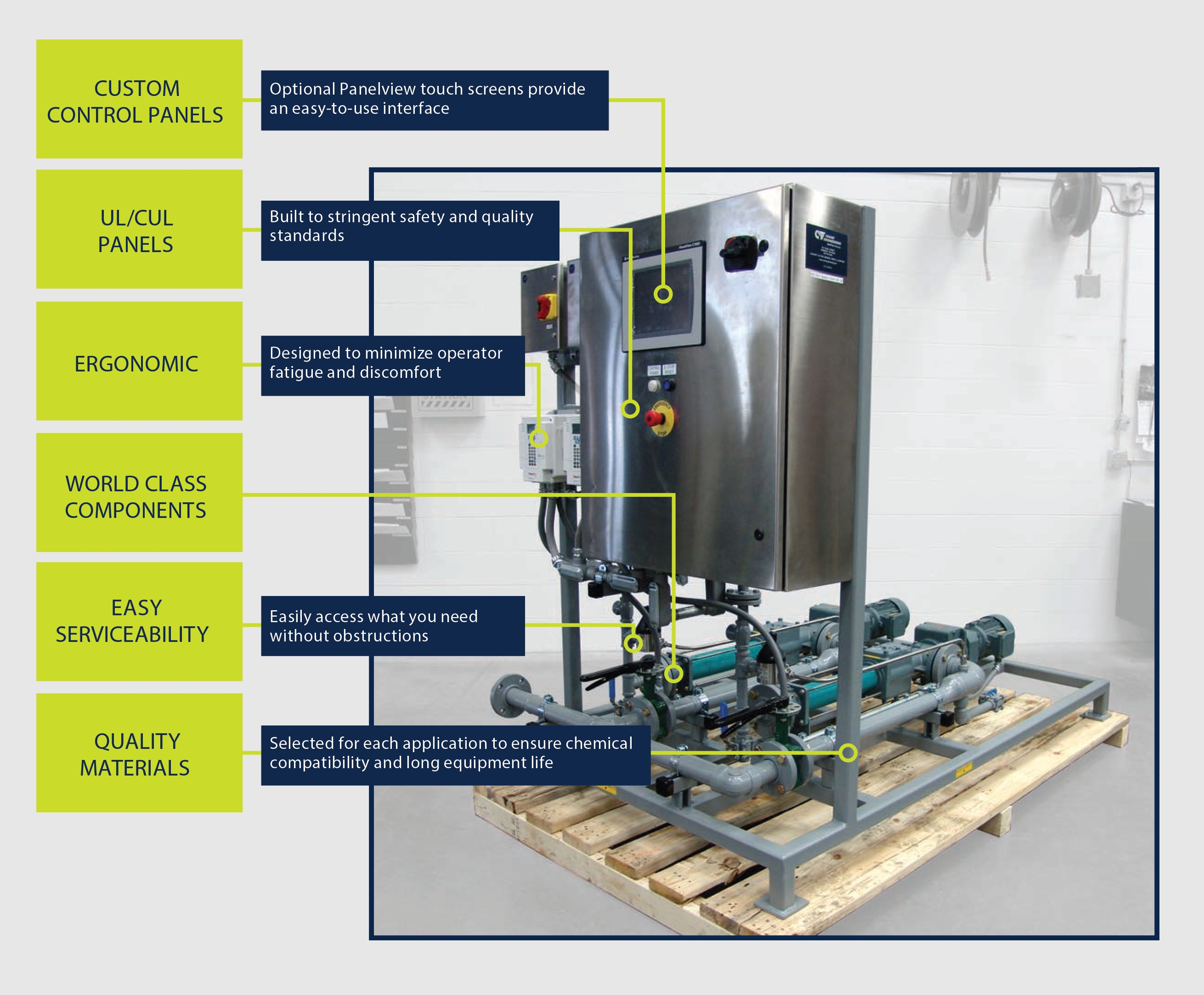
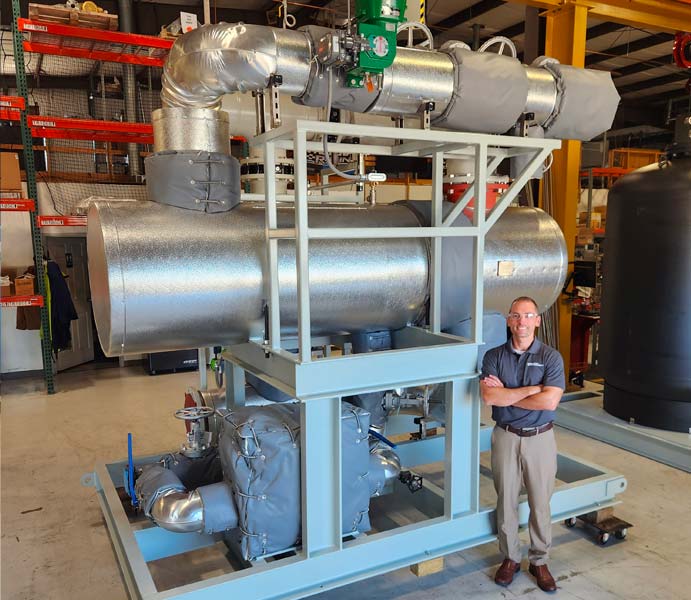
Modular skid systems allow critical process equipment to be integrated, tested, and delivered as a complete package before arriving on site.
Compared to traditional field-built installations, modular systems can help reduce installation time, simplify commissioning, and minimize field labor.
Additional benefits include:
For remediation contractors managing multiple projects, this flexibility can improve equipment utilization while reducing downtime between jobs.
Many PFAS remediation sites are temporary by nature. Once treatment goals have been achieved, equipment often needs to be relocated to another project.
Modular skid systems make that transition significantly easier. Rather than investing in permanent infrastructure for every location, project teams can deploy systems where they're needed most and move them as remediation work progresses.
This mobility is especially valuable for remote sites where permanent construction may not be practical or cost-effective.
Because no two remediation projects are identical, modular skid systems are often designed around specific treatment processes.
Applications may include:

Designing the skid around the application allows engineers to optimize performance while simplifying installation and operation in the field.
Equipment is only one piece of a successful remediation project.
Working with an experienced system integrator can help ensure equipment is properly designed, fabricated, tested, and supported throughout the project lifecycle.
OptiFlow combines decades of fluid process expertise with custom skid design and fabrication capabilities to deliver application-specific systems that help remediation teams move from design to deployment with confidence.
As PFAS remediation continues to expand nationwide, modular skid systems provide a practical, scalable solution for organizations looking to improve flexibility, reduce installation time, and support evolving treatment requirements.
Traditional infrastructure builds can slow projects down due to extended installation timelines and complex field assembly.
Modular skid systems offer a faster path forward by providing:
One of the biggest advantages of modular skid systems in PFAS remediation is mobility.
Many contaminated sites — particularly those tied to historical land application or field spreading practices — are located in remote or difficult-to-access areas.
OptiFlow systems are designed to be:
This flexibility allows contractors and municipalities to maximize equipment utilization across multiple projects.
Flow rates, site access, regulatory requirements, and treatment methods all influence system design. OptiFlow skid systems support a wide range of applications, including:
With more than 87 years serving Wisconsin industries, Crane Engineering brings deep experience in fluid process systems and regional environmental challenges.
Local expertise means:
For engineering firms and remediation contractors, this translates to smoother project execution.
For municipalities, it builds confidence that systems will perform as expected.
As PFAS remediation efforts continue to expand, having a partner that understands both the technology and the local landscape can make all the difference.

.png)
Headquarters and Service Center
Located outside Green Bay, WI
707 Ford St,
Kimberly, WI 54136,
United States
920-733-4425
OptiFlow Design and Build Center
1002 Truman St,
Kimberly, WI 54136,
United States
920-733-4425
Burnsville Service Center
12265 Nicollet Ave,
Burnsville, MN 55337,
United States
952-444-1949
Grand Rapids Service Center
26489 Industrial Blvd,
Cohasset, MN 55721,
United States
952-444-1949