




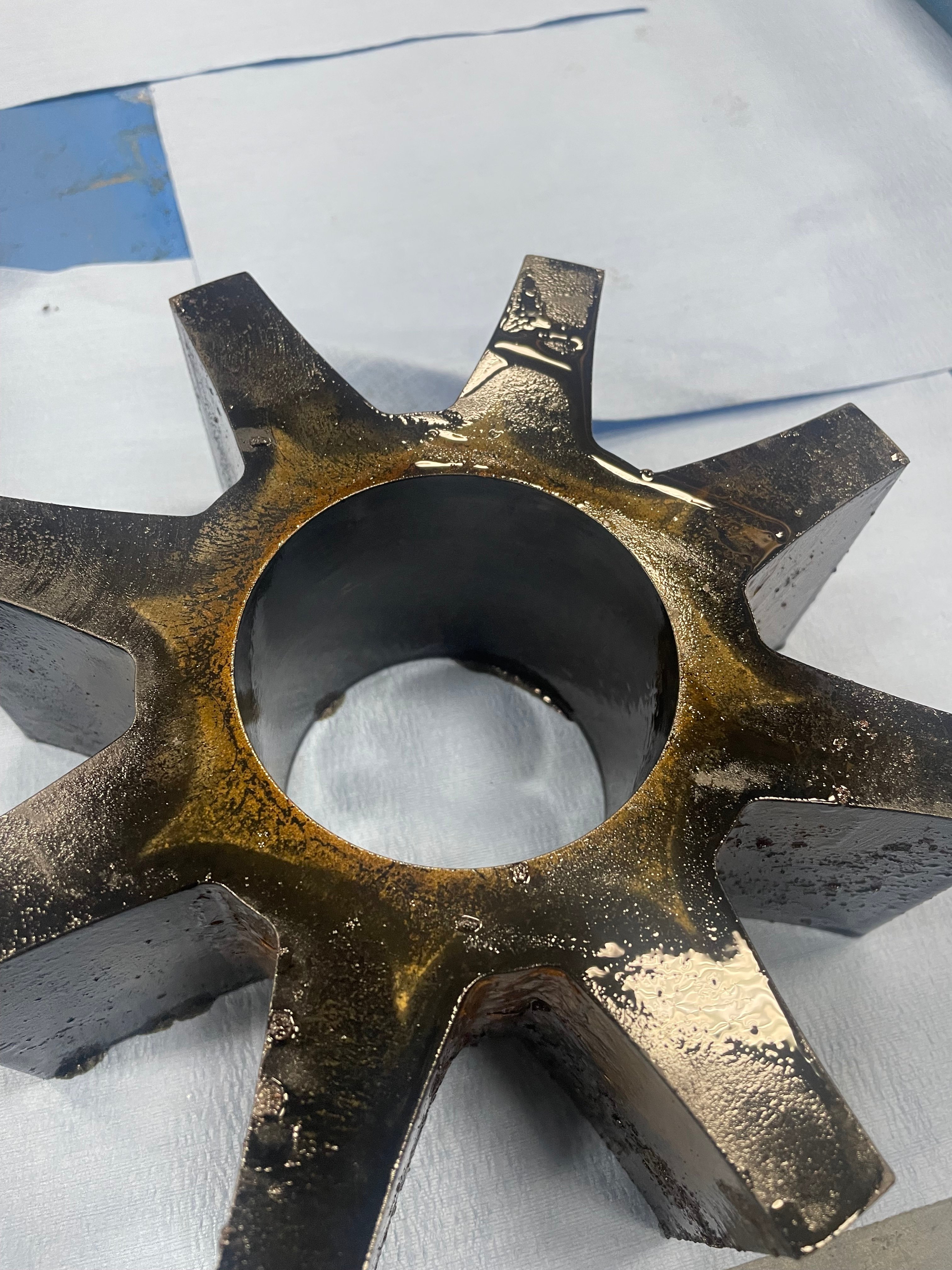


Have you sent in a failed pump for service only for it to fail right away again once you put it back into production? Quality rebuilds should restore a pump’s performance, but if the conditions that caused the original failure aren’t identified and addressed, a repeat premature failure is inevitable.
Continue reading to find out the five reasons a rebuilt pump may fail again and what maintenance teams can do to prevent it.
One of the biggest mistakes in pump repair is treating the damaged component as the cause of failure. Technically, it did cause the failure, but the key is looking deeper as to why. A worn bearing, damaged seal, or “pitted” impeller can tell you what happened if you pay close attention. 

Excessive wear may be related to a variety of factors, such as alignment, operating conditions, lubrication, pressure, contamination, cavitation, or another issue within the system. If those conditions remain unchanged, replacement components can experience the same stresses as the original ones.
That’s why a proper pump repair should go beyond replacing damaged parts. Inspection findings and wear patterns can provide important clues about what caused the failure in the first place.
As components wear, internal clearances can change. If those clearances aren’t properly measured and restored during a rebuild, the pump may return to service without performing as it should. This is especially important for process pumps operating in demanding applications with abrasive liquids. Rotary Lobe, End Suction and Self Priming pumps are examples of equipment where precision inspection and repair can make a significant difference.
During a rebuild, critical components need to be inspected and measured to determine whether they can be reused, repaired, or replaced. Restoring the proper clearances and tolerances helps ensure the pump is rebuilt to perform as intended.

Even a perfectly rebuilt pump can fail prematurely if it is being asked to operate outside its intended performance range.
Changes in:
Any of these factors can affect pump performance and component life.
Cavitation is another common concern. It can damage impellers and other internal components, leading to reduced performance, vibration, and premature wear. A repair shop may be able to restore the damaged components, but if the operating conditions that caused the damage remain unchanged, the same failure will eventually return. The pump and the system must be evaluated together.
Have your operating conditions changed, but the pumps haven't? Contact us for a system evaluation.

It’s easy to focus on the components that are visibly damaged. A damaged impeller can be a symptom of a larger operating problem. Wear on a shaft can affect a mechanical seal. Bearing wear can contribute to alignment issues and additional component damage. That’s why comprehensive inspections are so important.
For example, Crane Engineering technicians have repaired many Viking rotary positive-displacement pumps with significant cavitation damage, including repairing damaged pump casings and impellers, applying protective coatings, and balancing repaired impellers. A thorough inspection helps determine what needs to be repaired, what should be replaced, and whether the pump has additional issues that need attention before returning to service. 
Getting a pump back together is only part of the job. The bigger question is: Is it going to perform the way it should? This depends on the equipment and repair scope; testing, balancing, dimensional inspection, and other forms of inspection can provide an important final check before equipment returns to operation. During initial operation after rebuild, installing Suction Vacuum Gages and Discharge Pressure Gages, can help verify if the pump is operating properly for the intended condition and it’s usable operating range.
Looking for someone to get a pump back up and running? Contact our trained service team.
A Rebuild Should Do More Than Get Your Pump Running 
A pump rebuild is an opportunity to understand how the equipment failed, correct the underlying issues, and improve reliability moving forward. At Crane Engineering, our technicians use detailed inspection, precision measurement, repair expertise, and root-cause analysis to help uncover why equipment failed in the first place. Our service team repairs a wide range of industrial and municipal process pumps, with a focus on restoring equipment to reliable operating condition.
If you're dealing with a bad actor pump, another rebuild may not be the answer. It’s time to find out what’s really causing the problem. Let Crane Engineering evaluate your pump, identify potential causes of premature wear, and determine the right repair approach to help improve reliability in your application.
Headquarters and Service Center
Located outside Green Bay, WI
707 Ford St,
Kimberly, WI 54136,
United States
920-733-4425
OptiFlow Design and Build Center
1002 Truman St,
Kimberly, WI 54136,
United States
920-733-4425
Burnsville Service Center
12265 Nicollet Ave,
Burnsville, MN 55337,
United States
952-444-1949
Grand Rapids Service Center
26489 Industrial Blvd,
Cohasset, MN 55721,
United States
952-444-1949