




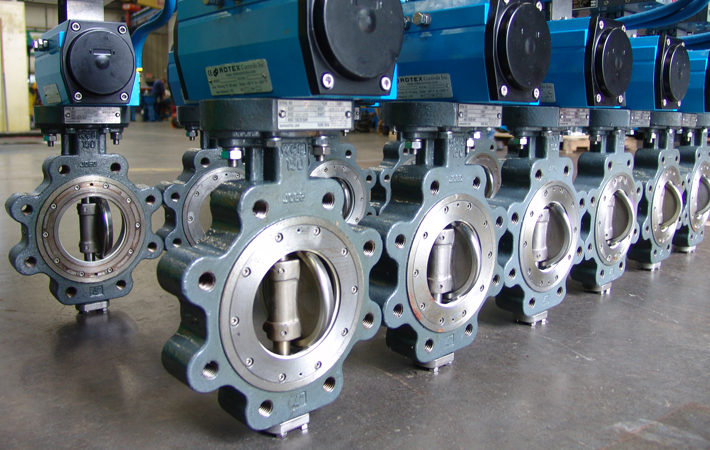


In any fluid system—industrial, sanitary, municipal, or commercial—liquids are in constant motion. When that motion suddenly stops or changes direction, the results can be violent. The shockwave that follows this abrupt change is known as water hammer, and it’s one of the most common yet misunderstood problems in piping systems.
At Crane Engineering, we’ve seen the impact of water hammer across countless applications—from municipal water systems to industrial process lines—and we’ve helped facilities diagnose and prevent the costly consequences. Understanding what causes water hammer, how to identify it, and the right design choices to prevent it can make a measurable difference in system reliability and safety.

Water hammer occurs when a liquid rapidly stops or changes direction. This could be caused by a valve that closes too quickly or a pump that suddenly shuts off. The kinetic energy in the moving fluid is instantly converted into pressure, creating a shockwave that travels through the piping system at thousands of feet per second.
This sudden spike in pressure can easily exceed a system’s design limits, causing loud banging noises, vibration, gasket failures, cracked fittings, blown valves, and even ruptured pipes. The wave reflects back and forth within the system until the energy dissipates—similar to the way a wave bounces off a shoreline.

Even minor occurrences of water hammer can add up to significant costs. Repeated stress on piping and components accelerates wear on:
More serious events can cause immediate mechanical failure and costly downtime for repairs and cleanup.
Beyond equipment damage, severe water hammer events can pose serious safety risks. In extreme cases, the sudden surge of force has been known to evacuate entire production areas or rupture high-pressure steam lines. These are not rare “flukes”—they’re a direct result of physics at work in improperly controlled systems. And water hammer is not only limited to water. Any fluid; chemicals, fuels, waste products, high temperature fluids, are all equally subjected to the effects of water hammer.
Water hammer isn’t limited to industrial settings. You may have experienced it at home when a washing machine or dishwasher abruptly shuts off and a loud bang echoes through the pipes. That’s the same phenomenon—just on a smaller scale.
In industrial and municipal applications, common scenarios include:
Each of these scenarios involves momentum, mass, and velocity—the key variables that determine how severe the water hammer effect will be.
A 100-foot section of 4-inch Schedule 40 carbon steel pipe holds approximately 544 pounds of water. If that water is moving at 600 feet per minute and is suddenly stopped, the resulting impact can generate 566 foot-pounds of force.
A 275-foot run of 12-inch stainless-steel pipe holds about 13,478 pounds of water. If moving at 800 feet per minute and abruptly stopped, the resulting force spikes to 18,325 foot-pounds—enough to clear a production floor. And this force doesn’t just act in one direction—it reverses and rebounds, amplifying the stress throughout the system, resulting in multiple water hammer occurrences in a single event.
That’s why managing both forward and reverse momentum is essential.
When fluid is moving forward, any component that stops it—especially a valve—must do so carefully. A valve that closes too quickly traps moving liquid with no place to go, triggering an instantaneous pressure rise.
These are common in process systems where valves open and close rapidly. To prevent water hammer:
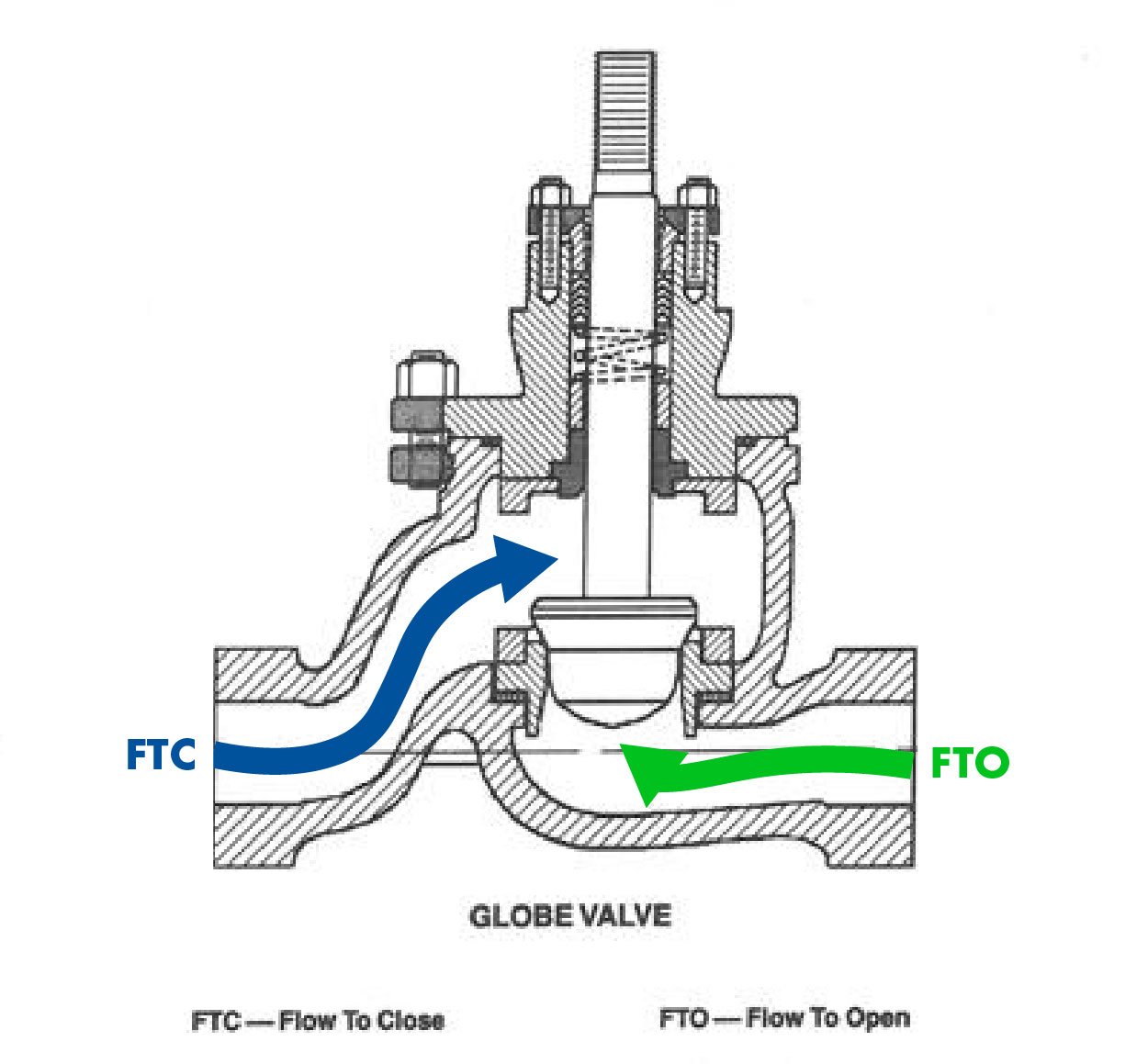
Flow orientation matters. Installing sanitary valves in the correct direction relative to flow can reduce turbulence and pressure buildup during actuation.
These are inherently slower and can reduce the risk of water hammer. Many quarter-turn or multi-turn actuators have cycle times ranging from 10 seconds to several minutes. Some manufacturers now include “pause” features that temporarily interrupt valve movement—sometimes for 100 seconds or more—to give the fluid time to decelerate gradually.
In short, when controlling forward momentum, slower is safer.
On the flip side, when flow reverses—such as when a pump shuts down—momentum works in the opposite direction. If a check valve doesn’t close quickly enough, the reversing fluid gains speed, slamming the valve shut with tremendous force. This is one of the most common and destructive sources of water hammer.
To prevent this:
Here, fast is better—the goal is to stop reverse momentum before it starts.
Steam systems face a unique challenge. Unlike liquid-only systems, steam lines can develop condensate slugs—pockets of water that form when steam cools and condenses. When high-velocity steam (up to 15,000 feet per minute in superheated systems) pushes those condensate slugs through the piping, the result is catastrophic water hammer.
For example, in a 6-inch steam header 300 feet long, a five-gallon slug of condensate can generate nearly 700 foot-pounds of force when accelerated by steam moving at 10,000 feet per minute.

Controlling momentum—both forward and reverse—is the foundation of water hammer prevention.
Diagnosing and solving water hammer issues requires more than replacing a valve or adding a dampener. It takes a system-wide understanding of fluid dynamics, valve actuation timing, and piping design.
At Crane Engineering, our team of engineers and field service specialists can:
Whether you’re operating a municipal treatment facility, industrial process line, or utility plant, Crane Engineering provides the expertise, equipment, and engineering support to keep your systems safe, reliable, and efficient.
Contact Crane Engineering today to schedule a system evaluation or on-site consultation with one of our process experts.

Headquarters and Service Center
Located outside Green Bay, WI
707 Ford St,
Kimberly, WI 54136,
United States
920-733-4425
OptiFlow Design and Build Center
1002 Truman St,
Kimberly, WI 54136,
United States
920-733-4425
Burnsville Service Center
12265 Nicollet Ave,
Burnsville, MN 55337,
United States
952-444-1949
Grand Rapids Service Center
26489 Industrial Blvd,
Cohasset, MN 55721,
United States
952-444-1949