






When engineers evaluate fluid process systems, most of the attention goes to the visible hardware: pumps, valves, piping, and instrumentation.
But the true performance of a skid system is defined somewhere else entirely.
It lives in the automation and controls.
Controls determine how equipment communicates, how operators interact with the system, and how efficiently the process responds to real-world conditions. Without well-designed automation, even the most robust mechanical system can struggle with startup delays, inconsistent performance, and avoidable downtime.
In modern facilities, automation is no longer optional. It is the foundation for efficiency, repeatability, and long-term reliability.
Industrial processes are becoming more complex. Facilities are expected to increase production, maintain tighter quality standards, and operate with fewer personnel. At the same time, systems must integrate with existing plant infrastructure and digital monitoring platforms. 
Automation is what makes this possible.
A well-designed control system does far more than turn equipment on and off. It manages sequencing, monitors process conditions, adjusts system performance in real time, and gives operators visibility into the entire operation.
When automation is properly engineered, facilities benefit from:
• Faster system startups
• Consistent process control
• Reduced operator intervention
• Improved equipment protection
• Better operational visibility
Without this level of integration, operators often rely on manual adjustments or disconnected control systems that make troubleshooting slow and frustrating.
For facilities that depend on fluid handling systems, automation transforms equipment into a reliable, high-performing process.
Every skid system has a mechanical structure made up of pumps, piping, and valves. But the control panel is what brings that system to life.
Inside the panel, programmable logic controllers (PLCs), motor drives, instrumentation, and network connections coordinate how the entire system operates. These components monitor process conditions and execute programmed responses to maintain performance. When designed correctly, the control system allows operators to start, monitor, and adjust the system with confidence. Maintenance teams can quickly diagnose issues, and plant managers gain access to performance data that supports better decision-making.
But when controls are poorly designed or added late in a project, problems often surface during installation or startup.
One of the most common mistakes in skid system projects is treating automation as a secondary task.
Some suppliers focus primarily on mechanical equipment and outsource the controls portion of the system. While this approach may reduce upfront effort, it often leads to coordination issues between mechanical and controls teams. 
When automation is not integrated early in the design process, facilities may encounter:
• Project delays during commissioning
• Limited customization for the process
• Difficulties integrating with existing plant controls
• Reduced visibility into system performance
These problems frequently appear when it is most expensive to resolve them.
Automation works best when it is engineered alongside the mechanical design. Controls should be built into the system architecture from the beginning, not added after the equipment is already designed.
Not all control systems deliver the same level of performance. When evaluating skid system suppliers, it is important to understand what separates basic controls from truly integrated automation. 
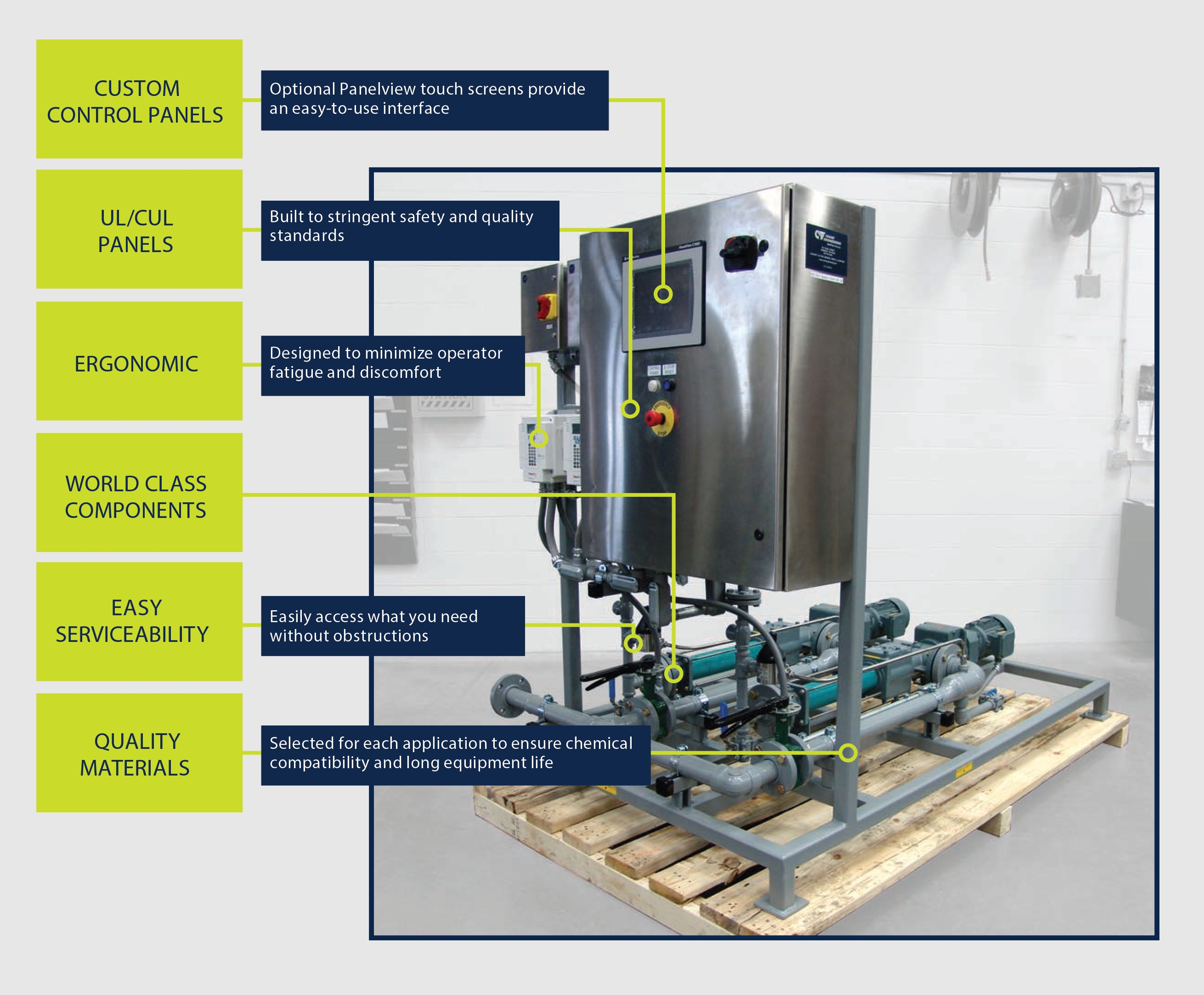
The human-machine interface (HMI) is how operators interact with the system. Generic control screens may provide basic functionality, but they rarely reflect the specific needs of a facility’s process.
Custom HMI programming allows the interface to match the workflow of the plant. Operators can quickly view system status, respond to alarms, and adjust settings without navigating unnecessary screens.This improves usability, reduces training time, and helps prevent operator error.
Automation should be tailored to the process it supports. Control logic must reflect how the system actually operates in the field. For example, a chemical transfer skid may require automated flow regulation and safety interlocks, while a food processing application may require batch control and sanitation sequences. When controls are customized for the application, the system operates more reliably and efficiently.
Remote monitoring capabilities have become increasingly valuable for modern facilities.
Integrated diagnostics allow technicians to review alarms, monitor system conditions, and troubleshoot problems without waiting for an onsite visit. This reduces downtime and accelerates maintenance response. Remote visibility also supports predictive maintenance strategies by allowing teams to identify performance trends before they lead to failures.
Control panel design must also meet safety and compliance requirements.
UL-listed panels provide assurance that electrical components and assembly practices meet recognized safety standards. For facility owners, this means easier inspections, improved reliability, and greater confidence in the system’s long-term operation.
Automation delivers the most value when it is designed in coordination with the mechanical system.
When engineers responsible for pumps, piping, instrumentation, and controls collaborate from the beginning, the result is a more cohesive solution. Equipment selection, control logic, and system layout all work together to achieve the desired performance. This integration also simplifies installation and commissioning. Documentation is clearer, instrumentation is properly coordinated, and startup procedures are more predictable. For complex fluid handling systems, this level of coordination can significantly reduce risk during project execution.
Beyond operational reliability, automation also helps reduce long-term operating costs.
Energy consumption is a major expense for facilities operating pumps continuously. Intelligent control logic and variable frequency drives allow systems to adjust output based on real-time demand rather than running at full capacity. Automation also helps reduce product loss by maintaining consistent process conditions and minimizing operator error. 
Over time, these improvements can generate substantial cost savings while improving system reliability.
When sourcing a skid system, it is important to understand how automation will be designed and supported.
• Are control panels designed and built in-house?
• Are panels UL-listed and built to industry standards?
• Can the system include custom HMI programming?
• Will the controls integrate with existing plant systems?
• Are remote diagnostics available?
• How are controls tested before shipment?
These questions help determine whether automation is a core capability of the supplier or simply an outsourced component of the project.
At Crane Engineering, automation is a foundational element of every custom skid system designed through the OptiFlow® division.
Rather than treating controls as an afterthought, OptiFlow® engineers design automation alongside the mechanical system from the beginning of the project. This ensures that pumps, instrumentation, control logic, and interface design work together seamlessly.
OptiFlow® systems feature:
• Custom HMI interfaces tailored to each process
• In-house control panel design and assembly
• UL-listed panels built to strict quality standards
• Integrated automation with remote diagnostic capabilities
This approach allows customers to achieve faster startup timelines, greater operational visibility, and long-term system reliability.
Successful fluid handling systems depend on more than pumps and piping. They depend on automation that allows equipment to operate efficiently, safely, and consistently.
For organizations planning a new skid system or process upgrade, evaluating automation capabilities is one of the most important steps in the buying process.
And if you want to make sure you are asking the right questions when comparing suppliers, our Smart Skid Buyer Checklist is a great place to start.
Click the button below to reach the OptiFlow® team and get the conversation started. We can't wait to work with you!
.png)
Headquarters and Service Center
Located outside Green Bay, WI
707 Ford St,
Kimberly, WI 54136,
United States
920-733-4425
OptiFlow Design and Build Center
1002 Truman St,
Kimberly, WI 54136,
United States
920-733-4425
Burnsville Service Center
12265 Nicollet Ave,
Burnsville, MN 55337,
United States
952-444-1949
Grand Rapids Service Center
26489 Industrial Blvd,
Cohasset, MN 55721,
United States
952-444-1949